Wednesday, November 30, 2011

We Love Our Pets


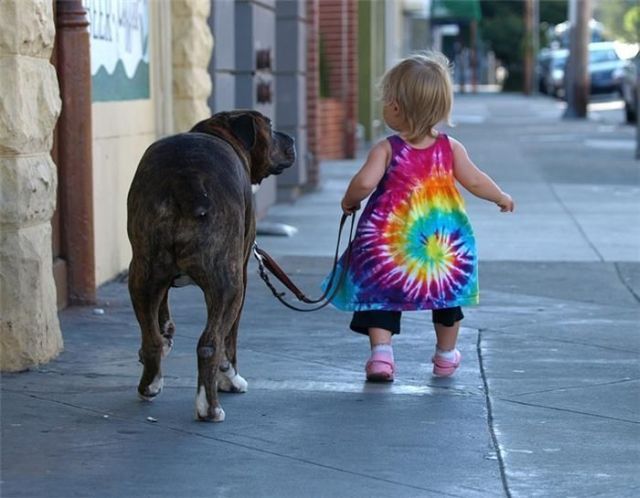
Americans own 73 million dogs and 90 million cats. They become best friends, soul mates, family members, and even surrogate children. Relationships with cats and dogs are some of the longest and most intimate of our lives.

Why are we so attached?

Animal behavior experts, evolutionary biologists, veterinarians, and pet owners share insights and observations about these animals and their impact on us.

Four-time Emmy Award winner, filmmaker and director Ellen Goosenberg Kent kept the 10-month production of NATURE’s Why We Love Cats and Dogs on the right track. Ellen brings a strong visual sense to the art of storytelling and was able to illuminate the dynamic human-pet relationship, revealing how dogs and cats share our emotions in many significant ways.

Watch here: Video: Full Episode

C.L.A.S.S.


Etiquette school for your dog!

A new national program called Canine Life and Social Skills uses positive reinforcement techniques to teach good manners, enabling owners to take their dogs with them to more places.

The C.L.A.S.S. program, taught by the association's members, focuses on using positive reinforcement when training to create a harmonious relationship between dog and owner. Through the use of fun games and exercises, some of the real-life skills participants learn include walking "nicely" on a leash, meeting strangers, and table manners. At the end of the six to eight week program, dogs are evaluated for certification.

For more information check out this website or call The Association of Pet Dog Trainers (APDT), a professional organization of individual trainers who are committed to becoming better trainers through education at 800-PET-DOGS

Monday, November 28, 2011

Adopt A Pet at Macy's

How much is that doggie in the window?


​It is that time again, when Macy's in San Francisco's displays hundreds of extremely cute puppies and kittens in its storefront window, tempting those passing through Union Square.

On November 18th Macy's unveiled their 2011 “Holiday Windows” with elaborately-decorated window displays featuring some adorable (and adoptable) cats and dogs to help benefit the SPCA and find these furry friends a new home.

Over the past six years, the Macy’s Holiday Windows have helped the SF SPCA raise over $320,000 and find homes for over 2,000 animals.

You have until New Year's Day to check out the display and adopt a friend for life or make a donation.

Sunday, November 27, 2011

Save Your Fingers!


Does your dog grab treats so that you fear for your fingers?

Here is a way to teach your dog "EASY" when offering a treat:

First, try to work this lesson when your dog is well-fed and somewhat tired.

Start with medium value treats that your dog likes but does not go crazy over. Visibly place a treat in your palm and close your hand.

Ignore when your dog paws and nips your hand trying to get the treat. Once the dog stops to figure out what might work, capture this moment and open you hand as you say, "EASY".

Repeat until your dog understands that that only calm grasps earn the treat.

Extend the behavior by holding the treat between your fingers and reminding your dog, "EASY".

Saturday, November 19, 2011

Ball Game

Is your dog ball crazy?

Loves to retrieve a ball?

Or is happiest with a ball or two in his mouth?


Try a different ball game; "roll a ball"

First use a ball too big to fit in your dog's mouth.

Tell your dog to stay while he watches you place a small treat on the floor by the ball. Then roll the ball forward to almost cover it.

Stand close behind the ball so it rolls toward you and release your dog to get the treat.

As he takes it, the ball will roll. Say, "Yes!" and reward by tossing a treat behind him. He will turn away from the ball to get that treat. Place another treat under the ball.

Repeat this several times, encouraging him to push the ball toward you to get the treat, rewarding with a tossed treat. He will expect a treat under the ball and will quickly return to push it again after collecting the tossed treat.

At this point, quit putting the treat under the ball and just encourage him to push it. Dog s are optimistic - he will look for the treat and the ball will roll. You might use, "Yes, roll the ball," and reward with a tossed reward treat. Soon your dog will understand that pushing the ball earns treats. Gradually stand farther back from the ball, and he will learn to roll it a longer distance.

Wednesday, November 16, 2011

Turkey Day Treats

You can include your dog in your Turkey Day celebration with this canine-friendly sweet potato recipe.

These dog treats are not hard and crunchy; they are more like cookies in texture. You can keep them in an airtight container for up to three days; to store them longer, put them in a zip-lock bag in the freezer.

If you like, use 1 1/2 cups mashed, cooked sweet potato or pumpkin in place of the canned.

Sweet Potato Dog Treats

1 15 ounce can sweet potatoes, drained
1/4 cup unsweetened applesauce
2 tablespoons olive oil
blend in.....
2 cups barley flour
2/3 cup whole wheat flour
1/2 cup nutritional yeast

Turn dough out onto lightly floured counter, and knead two or three times if necessary to completely incorporate the ingredients. Roll out to 1/4 inch thickness, cut into shapes, and transfer to a parchment paper lined baking sheet. Scraps may be rerolled and cut. Score large cookies with a fork, if desired. Brush lightly with olive oil and bake for 20 to 25 minutes at 350 degrees until firm and lightly brown.

Makes about 12 large treats.

Tuesday, November 15, 2011

Tracking Missing Pets


Kat Albrecht, a former police Bloodhound trainer and crime scene investigator, is teaching animal shelter volunteers how to find lost pets by using some of the same skills and tools employed by law enforcement in tracking down missing people.

The Shelter Pet Detective program at the Regional Animal Services of King County Shelter in Washington was started by Kat.

Helping owners find their lost pets is something most shelters do not aggressively or effectively do. Many pet owners give up hope due to lack of resources and support.

The pilot program was launched in July with about 35 volunteers trained to assist owners in finding their lost pets. Volunteers search the shelter for missing dogs by creating neon "lost pet" posters; use social media to broadcast lost pet information; and do physical searches armed with humane traps, DNA tests, and forensic tools.

Kat is trying to raise money to start the Shelter Pet Detective program in three other Washington state animal shelters and would like to see the program offered nationwide

For more information, visit the organization's website.